Exposición a pausas activas en el aula y atención en estudiantes de educación secundaria: revisión sistemática 2020-2026
DOI:
https://doi.org/10.59602/cys.v4i3.93Palabras clave:
atención, enseñanza secundaria, estudiante de secundaria, técnica didáctica, proceso de aprendizajeResumen
El objetivo fue sintetizar la evidencia científica publicada entre 2020 y 2026 sobre las diferencias en atención y concentración entre estudiantes de bachillerato expuestos habitualmente a pausas activas en el aula y aquellos con baja o nula exposición. Se realizó una revisión sistemática alineada con PRISMA 2020 y estructurada mediante PECO. La búsqueda se ejecutó en Scopus, Taylor & Francis, PubMed y Dialnet; de 1470 registros identificados, 18 estudios primarios cumplieron los criterios de inclusión. La extracción consideró diseño, población, modalidad, duración, frecuencia, comparador, instrumentos y resultados. La calidad metodológica se valoró con la Herramienta de Evaluación de Métodos Mixtos (MMAT) y los hallazgos se integraron mediante síntesis narrativa. Doce estudios comunicaron resultados favorables, cuatro hallazgos mixtos y dos ausencias de ventajas atencionales o cognitivas. Las respuestas más consistentes aparecieron tras pausas breves y estructuradas, aunque no se identificó una dosis universal de duración o intensidad. La confianza global fue moderada debido a la heterogeneidad de protocolos, medidas y diseños. Se concluye que las pausas activas constituyen un apoyo pedagógico prometedor para recuperar el foco atencional, pero su eficacia depende de la forma de aplicación y del rigor metodológico de la evidencia.
Descargas
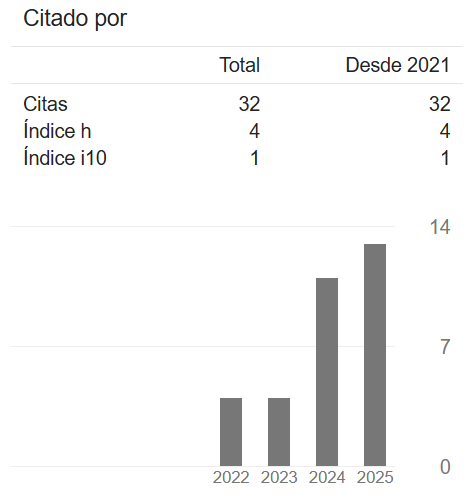
Citas
Alvarado-Melo, J., León-Ariza, H., Figueroa-Palacios, A., Gutiérrez-Galvis, A., Riveros-Medina, M., Rosa-Guillamon, A., & Garcia-Canto, E. (2026). Dose-response effects of a multimodal physical activity intervention on selective attention in schoolchildren from Bogotá. Children, 13(3). https://doi.org/10.3390/children13030364
Arribas Galarraga, S., & Maiztegi Kortabarria, J. (2021). Evolución de la atención, concentración y rendimiento académico tras una intervención basada en descansos activos. Revista Electrónica Interuniversitaria de Formación del Profesorado: REIFOP, 24(3), 87–100. https://dialnet.unirioja.es/servlet/articulo?codigo=8038811
Bandera-Campos, F. J., Sánchez-Oliva, D., González-Pérez, M., Martín-Acosta, F., Camiletti-Moirón, D., & Grao-Cruces, A. (2026). Voices on a multicomponent school-based physical activity intervention: A qualitative study with school leaders, teachers, and students from the MOVESCHOOL study. BMC Public Health, 26(1). https://doi.org/10.1186/s12889-026-27718-1
Barene, S., Oseland, H., Ølberg, R. I., & Litleskare, S. (2025). Effects of short physical activity sessions on physical fitness and cognitive control in Norwegian upper secondary school students: The MOVE12 pilot study. BMC Sports Science, Medicine and Rehabilitation, 17(1). https://doi.org/10.1186/s13102-025-01120-7
Bertón, J. N., Adelantado-Renau, M., & Beltran-Valls, M. R. (2025). Systematic review of the effects of active breaks on the cognition of secondary school and university students. Critical Public Health, 35(1).
https://doi.org/10.1080/09581596.2025.2598710
Bi, C., Yin, X., Shi, L., Wu, H., Wang, J., Shan, Y., Li, J., & Wang, M. (2024). Intervention effects of moderate and high intensities of classroom physical activity on cardiorespiratory fitness and executive function among junior grade one students in Tibetan. Chinese Journal of School Health, 45(3), 322–325.
https://doi.org/10.16835/j.cnki.1000-9817.2024083
Caamaño-Navarrete, F., Arriagada-Hernández, C., Sandoval-Obando, E., Lagos-Hernández, R., Delgado-Floody, P., & Fuentes-Vilugrón, G. (2026). Pausas activas y funciones cognitivas en el contexto escolar: Una revisión sistemática. Retos, 74, 423–438. https://doi.org/10.47197/retos.v74.117320
Castillo Cortez, O. A., Cheza Castro, A. A., Figueroa Sacón, F. F., Revelo Gordón, V. E., & Rosas Páez, N. A. (2024). Influencia de las pausas activas en la concentración y rendimiento matemático de estudiantes de bachillerato con TDAH. LATAM Revista Latinoamericana de Ciencias Sociales y Humanidades, 5(5), 4259–4281. https://doi.org/10.56712/latam.v5i5.2922
Cerdán Benítez, L., Velásquez Bonilla, S., Villacrés Morales, N., & Aldáz Mora, S. (2026). Uso de pausas activas para mejorar la atención en estudiantes con TDAH. Polo del Conocimiento, 11(2), 173–187. https://doi.org/10.23857/pc.v11i2.11109
Cornelius, C., Fedewa, A., & Toland, M. (2020). A classroom-based physical activity intervention for adolescents: Is there an effect on self-efficacy, physical activity, and on-task behavior? Health Psychology Report, 8(4), 408–427. https://doi.org/10.5114/hpr.2020.99002
González-Fernández, F. T., González-Víllora, S., Baena-Morales, S., Pastor-Vicedo, J. C., Clemente, F. M., Badicu, G., & Murawska-Ciałowicz, E. (2021). Effect of physical exercise program based on active breaks on physical fitness and vigilance performance. Biology, 10(11). https://doi.org/10.3390/biology10111151
González-Pérez, M., Sánchez-Oliva, D., Martín-Acosta, F., Ruiz-Hermosa, A., Camiletti-Moirón, D., & Grao-Cruces, A. (2025). A mixed-methods approach of the effect of physically active learning on time-on-task in the secondary education class: The ACTIVE CLASS study. Learning and Instruction, 97.
https://doi.org/10.1016/j.learninstruc.2025.102091
Graham, J. D., Bremer, E., Fenesi, B., & Cairney, J. (2021). Examining the acute effects of classroom-based physical activity breaks on executive functioning in 11- to 14-year-old children: Single and additive moderation effects of physical fitness. Frontiers in Pediatrics, 9. https://doi.org/10.3389/fped.2021.688251
Guirado, T., Chambonnière, C., Chaput, J.-P., Metz, L., Thivel, D., & Duclos, M. (2021). Effects of classroom active desks on children and adolescents’ physical activity, sedentary behavior, academic achievements and overall health: A systematic review. International Journal of Environmental Research and Public Health, 18(6), 2828. https://doi.org/10.3390/ijerph18062828
Hidalgo-Muñoz, A. A., & Bohorquez-Troya, A. M. (2025). Beneficios de la implementación de pausas activas en el desarrollo del aprendizaje. Innova Science Journal, 3(4), 150–158. https://doi.org/10.63618/omd/isj/v3/n4/128
Infantes-Paniagua, Á., Silva, A. F., Ramirez-Campillo, R., Sarmento, H., González-Fernández, F. T., González-Víllora, S., & Clemente, F. M. (2021). Active school breaks and students’ attention: A systematic review with meta-analysis. Brain Sciences, 11(6). https://doi.org/10.3390/brainsci11060675
Javier-Rivera, L. S., Barceló-Rodríguez, V., Canté-Cuevas, X. C., Kent-Sulú, M. P., & Vásquez-Gutiérrez, M. G. (2024). Beneficio de la aplicación de las pausas activas para la disminución de estrés académico en estudiantes de Fisioterapia. RIDE Revista Iberoamericana para la Investigación y el Desarrollo Educativo, 14(28). https://doi.org/10.23913/ride.v14i28.1759
Kjellenberg, K., Ekblom, Ö., Tarassova, O., Fernström, M., Nyberg, G., Ekblom, M. M., Helgadóttir, B., & Heiland, E. G. (2024). Short, frequent physical activity breaks improve working memory while preserving cerebral blood flow in adolescents during prolonged sitting—AbbaH teen, a randomized crossover trial. BMC Public Health, 24(1), 2090. https://doi.org/10.1186/s12889-024-19306-y
Latino, F., Tafuri, F., Saraiello, E., & Tafuri, D. (2023). Classroom-based physical activity as a means to improve self-efficacy and academic achievement among normal-weight and overweight youth. Nutrients, 15(9). https://doi.org/10.3390/nu15092061
Maiztegi-Kortabarria, J., Arribas-Galarraga, S., Luis-de Cos, I., Espoz-Lazo, S., & Valdivia-Moral, P. (2024). Effect of an active break intervention on attention, concentration, academic performance, and self-concept in compulsory secondary education. European Journal of Investigation in Health, Psychology and Education, 14(3), 447–462. https://doi.org/10.3390/ejihpe14030030
Masini, A., Longo, G., Ricci, M., Scheier, L. M., Sansavini, A., Ceciliani, A., & Dallolio, L. (2024). Investigating facilitators and barriers for active breaks among secondary school students: Formative evaluation of teachers and students. Children, 11(2). https://doi.org/10.3390/children11020155
Mavilidi, M. F., Mason, C., Leahy, A. A., Kennedy, S. G., Eather, N., Hillman, C. H., Morgan, P. J., Lonsdale, C., Wade, L., Riley, N., Heemskerk, C., & Lubans, D. R. (2020). Effect of a time-efficient physical activity intervention on senior school students’ on-task behaviour and subjective vitality: The ‘Burn 2 Learn’ cluster randomised controlled trial. Educational Psychology Review, 33(1), 299–323.
https://doi.org/10.1007/s10648-020-09537-x
Melguizo-Ibáñez, E., Zurita-Ortega, F., González-Valero, G., Puertas-Molero, P., Tadeu, P., Ubago-Jiménez, J. L., & Alonso-Vargas, J. M. (2024). Active break as a tool for improving attention in the educational context: A systematic review and meta-analysis. Revista de Psicodidáctica, 29(2), 147–157.
https://doi.org/10.1016/j.psicod.2024.01.002
Melguizo-Ibáñez, E., Zurita-Ortega, F., Tadeu, P., Ubago-Jiménez, J. L., & Vargas, J. M. (2026). Classroom active breaks as a physical-educational intervention for executive functions and mathematical outcomes: A systematic review with meta-analysis. Educational Psychology Review, 38(1). https://doi.org/10.1007/s10648-026-10146-3
Reyes-Amigo, T., Salinas-Gallardo, G., Mendoza, E., Ovalle-Fernández, C., Ibarra-Mora, J., Gómez-Álvarez, N., Carrasco-Beltrán, H., Páez-Herrera, J., Hurtado-Almonácid, J., Yañez-Sepúlveda, R., Zapata-Lamana, R., Sepúlveda-Figueroa, F., Olivares-Arancibia, J., & Mota, J. (2025). Effectiveness of school-based active breaks on classroom behavior, executive functions and physical fitness in children and adolescent: A systematic review. Frontiers in Public Health, 13.
https://doi.org/10.3389/fpubh.2025.1469998
Robinson, K. J., Lubans, D. R., Mavilidi, M. F., Hillman, C. H., Benzing, V., Valkenborghs, S. R., Barker, D., & Riley, N. (2022). Effects of classroom-based resistance training with and without cognitive training on adolescents’ cognitive function, on-task behavior, and muscular fitness. Frontiers in Psychology, 13.
https://doi.org/10.3389/fpsyg.2022.811534
Romar, J.-E., Enlund, M., Lind, S., & Björkgren, M. (2023). Movement integration in academic classrooms: A focus on secondary students’ experiences. Journal of Physical Education and Sport, 23(4), 918–928. https://doi.org/10.7752/jpes.2023.04115
Rosa-Guillamón, A., & Carrillo-López, P. J. (2024). Acute effect of physically active breaks on attention in adolescents. Estudios sobre Educación, 46, 173–194. https://doi.org/10.15581/004.46.008
Ruhland, S., & Lange, K. W. (2021). Effect of classroom-based physical activity interventions on attention and on-task behavior in schoolchildren: A systematic review. Sports Medicine and Health Science, 3(3), 125–133.
https://doi.org/10.1016/j.smhs.2021.08.003
Ruiz-Ariza, A., López-Serrano, S., Mezcua-Hidalgo, A., Martínez-López, E. J., & Abu-Helaiel, K. (2021). Acute effect of physically active rests on cognitive variables and creativity in secondary education. Retos, 39, 635–642.
https://doi.org/10.47197/retos.v0i39.78591
Ruiz-Ariza, A., Suárez-Manzano, S., Mezcua-Hidalgo, A., & Martínez-López, E. J. (2025). Effect of an 8-week programme of active breaks between classes on cognitive variables in secondary school. Educational Studies, 51(2), 189–207.
https://doi.org/10.1080/03055698.2022.2128992
Ruiz-Hermosa, A., Sánchez-Oliva, D., Grao-Cruces, A., Medrano, M., González-Pérez, M., Martín-Acosta, F., & Camiletti-Moirón, D. (2025). Feasibility, acceptability, and effectiveness of physically active lessons in secondary education: ACTIVE CLASS pilot study. Translational Journal of the American College of Sports Medicine, 10(2). https://doi.org/10.1249/TJX.0000000000000290
Sánchez-López, M., Violero-Mellado, J., Martínez-Vizcaíno, V., Laukkanen, A., Sääkslahti, A., & Visier-Alfonso, M. E. (2025). Impact and perceptions of active learning classrooms on reducing sedentary behaviour and improving physical and mental health and academic indicators in children and adolescents: A scoping review. PLOS ONE, 20(2), e0317973. https://doi.org/10.1371/journal.pone.0317973
Tjomsland, H. E., Stokker, V., Kråkenes, A. T., Urke, H. B., & Mandelid, M. B. (2026). ‘It is more fun to try it out for yourself’: Lower secondary school pupils’ perceptions of physically active learning. Children & Society. https://doi.org/10.1111/chso.70071
Zhunio Suin, L. R., Párraga Moreira, J. L., Coronel Macías, M. N., Broncano Abarca, I. F., & Arellano Arellano, T. E. (2024). El rol de las pausas activas en el aprendizaje y su influencia en la concentración del estudiante. Ciencia Latina Revista Científica Multidisciplinar, 8(6), 10273–10290. https://doi.org/10.37811/cl_rcm.v8i6.15685
Zurita-Ortega, F., González-Valero, G., Ubago-Jiménez, J. L., & Melguizo-Ibáñez, E. (2025). Analysis of cognitively loaded physical tasks and active breaks for the improvement of executive functions in the school context: A systematic review and meta-analysis. Revista de Psicodidáctica, 30(2). https://doi.org/10.1016/j.psicod.2024.500163
Descargas
Publicado
Cómo citar
Número
Sección
Licencia
Derechos de autor 2026 Ángel Patricio Herrera Carrión, Alexandra Silvestre Cárcamo Bustamante, Ricardo Alberto Vargas Grefa, Jesús Santiago Jumbo Jima

Esta obra está bajo una licencia internacional Creative Commons Atribución-NoComercial-CompartirIgual 4.0.